10 Years After the Paris Agreement: We’re not on track, so what do we do now?
A look into the controversies, conflicts, and culmination of the COP30 Amazonia in Belém, Brazil
Article by: Sophie Diemer – Communication Manager and part of Climate Action Working Group, UNYA Aalborg
Edited by: Maja Cawthra – Journalism Manager, UNYA Aalborg
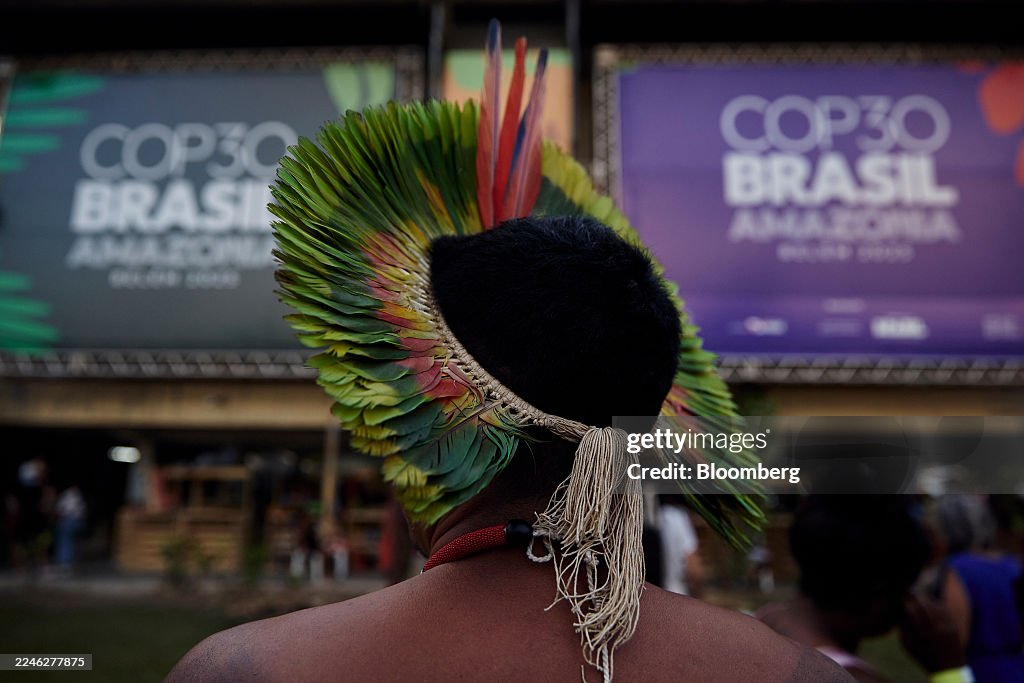
his year’s climate conference has taken place in a much more divided political landscape than many previous Conference of the Parties (COP); with Simon Stiell, the Climate Change Executive Secretary for the UN, saying in his closing speech that this conference took place in “stormy political waters”. This couldn’t be a more accurate description. From controversy around the host nation, Brazil, due to the deforestation necessary to build the COP facilities, to trade regulations making its way into the negotiations, and major economic powers no longer prioritising the green transition. Let’s break down the good, the bad, the ugly, and where we go from here, starting with the bad and ugly so we can end on a high note.
10 years later…
It’s been 10 years since the groundbreaking climate treaty, the Paris Agreement, was adopted in 2015, with 195 countries pledging to make the world a greener place. This year’s COP was supposed to shift the focus away from what the world needs to do to limit rising temperatures and climate action. Instead, the hope was to decide how exactly we will do it. Which laws should be implemented? Where should the funds come from? Who should benefit from them? The question now remains: did we succeed?
For anyone unfamiliar, the Paris Agreement is a legally binding treaty, a pledge to limit the planet’s rising temperature and to keep it from exceeding 2℃ at worst and 1.5℃ at best. To hit the 1.5℃ goal, it would require the world’s emissions to peak in 2025 and be significantly reduced by 2030. With less than a month left of the year, it’s safe to say that we are nowhere near this goal. In reality, emissions are still rising and experts predict that we will exceed the 1.5℃ limit within the next decade. This is, in simple terms, a climate disaster waiting to happen.
What happened?
The failure to stay on track cannot be attributed to one individual cause or nation. Instead, it is a failure of the global society as a whole. However, some of the major contributing factors are still worth discussing.
This year, the United States’ President, Donald Trump, pulled out of the Paris Agreement, and signed a new bill which heavily focuses on using fossil fuels as energy sources rather than green alternatives. As one of the world’s major economies, the signalling power of the US leaving the Paris Agreement and halting their renewable energy focus could turn out to be a considerable hit to the green energy agenda. And although the US stayed away from this year’s COP, many other fossil fuel-producing countries, such as Russia and Saudi Arabia, took up the mantle and systematically blocked any attempts at making roadmaps of how to move away from fossil fuels and towards cleaner energy sources.
At the same time, the EU was struggling to make actual headway in negotiations focusing on the move away from fossil fuels, while also dealing with internal struggles to come up with collective National Determined Contributions to present at the COP. As the EU is the richest group of nations that are still a part of the Paris Agreement and therefore the ones that theoretically should have the easiest time converting to more climate-friendly solutions, this is a concerning development. However, if the EU cannot be a frontrunner in the conversion to sustainable energy, perhaps China can. They spent much of the COP quietly making deals and securing solar energy technology sales. China is currently dominating the US in the renewable energy technology sector, and as the long-term trend is still moving in that direction, China might very well end up being the frontrunner.
The bright side
Speaking of long-term trends, it fortunately looks like the climate action “boat” is still afloat. Despite the uncertainty about what the future of the COP will look like, it seems as if the general consensus is that we can’t leave the climate talks behind. So let’s take a look at some of the positive outcomes from this year’s COP.
This year, climate financing was in the spotlight, and although not an official part of the agenda, a high-level political text called the Mutirão decision was adopted by the parties to continuously work towards helping developing countries finance their climate actions. Additionally, the goal for adaptation financing has been tripled, showing a commitment to help developing countries adapt to climate change as it happens, to protect their communities, economies, and ecosystems. A small caveat is that the proposed deadline of 2030 has been pushed to 2035, risking that though the money will come, it might come too late.
Another major milestone from COP30 is the successful end to the negotiations regarding the Gender Action Plan. The plan is the first essential step towards advancing gender-responsive climate action. It calls for integrating gender into national climate policies and decision-making and paves the way for other multidimensional factors, such as race, disability, and age, to be recognised for the impact they have on every individual’s experiences related to climate change and their ability to take climate action.
So what now?
Until the next COP, cohosted by Türkiye and Australia, Brazil has promised to keep the momentum going by delivering roadmaps for deforestation and transitions away from fossil fuels. Despite the US’s objections and boycott, the G20 summit managed to adopt a declaration on the climate crisis and other global challenges, while trade and climate financing talks continued outside of the UNFCCC (United Nations Framework Convention on Climate Change). Although the hope to stay under the 1.5℃ limit is shrinking fast, it is still worth fighting to keep the exceedance as short-lived as possible, and the hope is that the shift towards implementation COPs rather than goal COPs will help us move in the right direction.
All in all, it has been a tumultuous COP, filled with protests, controversies, and disagreements. Interests are polarising, and collaboration is fragmenting. Yet, all is not lost, and there is light at the end of the tunnel. The COP proved that climate action is still a priority, and the fate of the planet has not been given up on. The battle to limit rising temperatures may have gotten harder, but the fight is still on. Renewable energy technology is becoming cheaper, sustainability is becoming more available, and the UN hasn’t given up yet. Have you?
Join us in fighting climate change and spreading awareness about the UN’s Climate Action Sustainable Development Goal. Sign up to volunteer at UNYA today!
For more information and to read our sources, take a look at these articles!
COP 30 Outcomes Report – Global Climate Action Agenda at COP 30
UN Environmental Program – The world is likely to exceed a key global warming target soon. Now what?
Time – The World Is Failing Its 2025 Paris Agreement Target. Now What?