For the youth! By the youth?
Written by: Maja Christiansen Cawthra
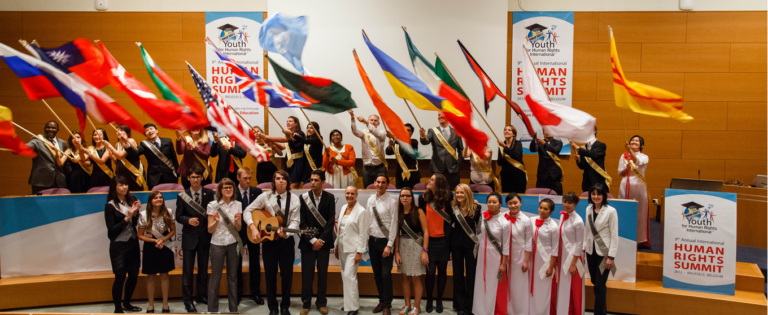
Young people are often talked about in politics, but they are rarely invited to take part in it. Adults ask what young people care about, what they want to be when they grow up and how they will change the world. At the same time, young people are frequently dismissed as ‘snowflakes,’ portrayed as too sensitive, too idealistic, or too inexperienced to understand how the world really works.
This creates a disconnect. Young people are expected to live with the consequences of political decisions from education, jobs, climate, equality, and even international cooperation and yet they are often left outside the rooms where those decisions are made.
During a China–Nordic Friendship Dialogue attended by representatives of UNYA, Nermeen Ghoniem, vice president of UNYA Copenhagen, delivered a speech on exactly this problem. She argued that young people should not only be included in politics, but treated as genuine partners in the conversations that shape their futures. Stating:
“Through my work with UNYA Copenhagen, I have seen how much young people have to contribute when they are given the opportunity. We often call young people the leaders of tomorrow. But tomorrow is a convenient word. We cannot keep telling young people that the future belongs to them while keeping them outside the rooms where that future is being decided… Meaningful dialogue is not reserved for those with the longest careers or the most impressive titles. A twenty-year-old’s curiosity can be just as valuable as an expert’s experience, even if they contribute in different ways.” (speech is abridged).
But how do young people actually enter these large, intimidating, and often exclusive political spaces?
In Denmark, one answer is Dansk Ungdoms Fællesråd, or the Danish Youth Council (DUF). DUF is an umbrella and advocacy organisation for 77 socially engaged children’s and youth organisations. Through its Youth Delegate Programme, eight young delegates represent Danish youth at the United Nations and other international forums.
These delegates are nominated by Danish children and youth organisations before being appointed by the Danish Youth Council. They work across four areas: democracy and partnerships; technical and vocational education and job creation; climate and environment; and equality and sexual and reproductive health and rights. Their role is not only to attend international meetings. They also share and anchor global agendas among young people in Denmark through information and outreach activities.
These are not simply impressive titles. They are positions that come with responsibility, visibility, and the opportunity to influence real conversations.
For example, you have delegates, Marie Smedegaard Andersen and Rosa Pedersen, who attended the recently concluded COP31 in Türkiye as Danish UN youth representatives. Not only did they attend; they also participated in the event, helping to create a video titled the Global Youth Manifesto that was showcased at the summit. The manifesto calls for young people to be included as equal partners in climate action, not merely as the subjects of climate policy, but as people with a seat at the decision-making table. As Marie Andersen said in an article to DR: “It’s really great that young people can join forces. When we organise ourselves, we can go further.” (translated from Danish to English).
But one delegate from DUF stands out:
Aksel Munk Hansen. Unlike the image many people have of a UN youth representative (someone with a degree in political science, international relations, or years of experience in well-known organisations), Aksel is a trained boat builder.
That background is precisely what makes his role important.
DUF appoints delegates within four areas, and Aksel was one of the representatives for technical and vocational education and job creation. His experience as a newly educated boatbuilder gave him a perspective that many policymakers lack: an understanding of vocational training, work, and the real choices young people face after finishing high school.
As his time as a DUF youth representative comes to an end in December 2026, Aksel has accomplished much in both Denmark and internationally. He attended UN meetings in New York, travelled to South Africa and Moldova, and often found himself in rooms filled with hundreds of adults in suits where he would realise that he was the only young person in that room. But with that, one’s words gain a completely different weight. He was able to give fresh and personal perspectives on his own work experience in Denmark compared to other countries.“There are countries where you learn to sew a pair of trousers, and then you do it for ten years, and then you might be retrained to sew a dress. In Denmark, you soon learn about all sorts of things from across the industry, so you’re ready to take a job afterwards” (quoted from DR article).
Aksel’s experience shows how unequal access to political influence still is.
His perspective was not valuable simply because he was “youthful” in a decorative sense; it was valuable because it brought a different kind of knowledge into the room. Knowledge shaped by practical work, vocational education, and the everyday realities of young people entering the labour market.
This challenges the assumption that someone needs a particular degree, network, or appearance to belong in international politics. A young boat-builder does not need to become someone else in order to be taken seriously. What matters is whether institutions are willing to listen to people whose experiences differ from their own and, even more importantly, whether they give those experiences a real platform.
This thought once again reminded me of Nermeen’s speech, where she goes on to simply request that the audience do something simple: “Ask young people more questions. And be genuinely curious about their answers… Alongside my work with UNYA, I also work at LEGO. And something I find inspiring is how differently children approach building. When I open a LEGO set, my first instinct is to follow the instructions. But children often skip them and start creating something entirely their own. Where we see instructions to follow, they see possibilities to explore. They don’t begin by asking what should be built. They begin by imagining what could be. And I believe that same curiosity has a place in the way we approach international cooperation. “
DUF is a step in the right direction with its youth delegates, showing that young people can contribute meaningfully to international decision-making when they are given the opportunity. But a few delegates cannot replace broader participation. There is still a long way to go before young people are genuinely represented in the spaces where decisions about their lives are made.
So perhaps the question should not be, “What do young people want to be when they grow up?”
Perhaps it should be: “What do young people see today that the rest of us have stopped noticing?”
Because tomorrow is a convenient word.
Try today.