Greenland’s Strive for Independence

Article by: Maja Christiansen Cawthra
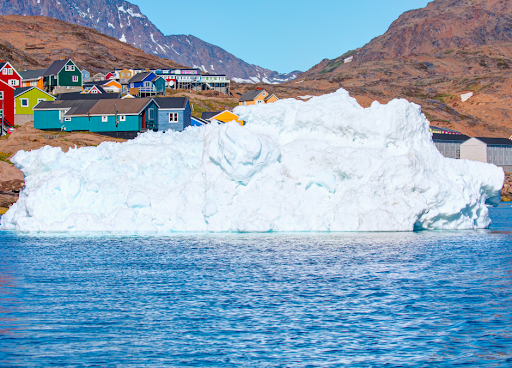
greenland
In early June 2023, after six years in the process, Greenland unveiled a draft constitution outlining a future, entirely independent, Greenlandic republic that would say farewell to the Danish monarchy. This raised some eyebrows in Denmark, with Rasmus Jarlov, a member of the Conservative People’s Party (Det Konservative Folkeparti) and former Minister of Business Affairs, saying “It is sad. It is a clear goodbye to anything Danish. I also note that the Danish language is accorded no role. I hope that there is no widespread support for this, but it is not something over which we have any influence.”
Yet to many, this seems like the natural progression following the 1979 Greenland Home Rule agreement, and later the Act of Self-Government passed in 2009, where Greenland gained autonomy in various areas. The Act from 2009 also specifically states that an agreement of independence requires a referendum in Greenland and the approval of the Danish Parliament. As of the time of writing this, the draft constitution has still not been discussed or taken up in Parliament.


It is interesting discussing Greenland’s tentative steps to establishing independence, not only because of its long and complex history with Denmark, but also due to its growing geopolitical importance in an increasingly contested Arctic.
A short history of tensions
It is generally known that Greenland has nearly always held a close relationship with Denmark, being associated politically and culturally for nearly a millennium. After all, Greenland was a Danish colony until 1953 when it was redefined as a district and has since remained in the Danish Kingdom.
However, this relationship has had its fair share of tensions over the years, which can provide insight as to why Greenland is persistent in its search for independence. Perhaps most famously, or rather infamously, was the incident, known colloquially as “The Experiment” (the name being from a well-known Danish film based on this incident). Where in the 1950s, the Danish government took 22 Greenlandic children from their families in an attempt to integrate them into Danish culture and society. The children were then to return to Greenland as part of a new ‘Danish-speaking Elite’ that would help modernise the ‘backwards’ Inuit population of Greenland.
The experiment failed and most of the children ended up in orphanages and were marginalised from their native, as well as Danish, society. Many experienced mental illnesses and fell victim to substance abuse, with more than half of the children dying in early adulthood. Only recently, due to intense public pressure, has the Danish government apologised, with the six remaining survivors receiving compensation of 250 000 krs after they sued for damages.
While this is considered to be the darkest chapter in the modern relationship between Denmark and Greenland, tensions are still present. Such as last year when Denmark appointed a new ambassador to represent the territory, namely Tobias Elling Rehfeld, who has no connection to the region. The Arctic ambassador is supposed to represent particular Greenlandic concerns, such as environmental concerns and problems affecting Indigenous populations. The Prime Minister of Greenland, Mute Egede, argues that this violates the agreement that no Danish decisions concerning Greenland, or the Faroe Islands, would be taken without their approval. He states: “The procedure shows what the Ministry of Foreign Affairs thinks of us and how it does not include us, even though we are the kingdom’s Arctic country, the picture speaks for itself.”
Another area of tension is the recent incident where Aki-Matilda Høegh-Dam, one of Greenland’s representatives in the Copenhagen Parliament, addressed the Chamber in Greenlandic and refused to speak Danish. She stated that: “It is a relic from the
colonial era that we still only speak Danish in the hall, if Denmark were in reality a commonwealth, we would also be able to accommodate each other’s languages.”
Is it economically possible for Greenland to gain independence?
A large talking point that is brought up when debating Greenland’s independence is its heavy reliance on Denmark. Greenland receives a subsidy of more than $500 million (roughly 3.9 billion krs) annually from Denmark, which accounts for 20% of the island’s total economy, and over half its public budget. Denmark also remains responsible for Greenland’s defence, as the region possesses no military of its own. These are some major factors that would make it difficult for Greenland to completely sever ties with Denmark, which has led to criticism to come out over the unveiling of the draft constitution. The political party of Atassut in Greenland deems it unnecessarily expensive and not needed, wishing to maintain the power-sharing arrangement with Denmark.
International Implications
It is not only Greenland that would face massive changes and hurdles if it were to declare independence, there is also a lot at stake from a Danish perspective. Denmark is only involved in Arctic affairs due to its relationship with Greenland. 
Greenland and other Arctic states are rich in resources, and warming temperatures due to climate change has increased the geopolitical interest and competition over the Arctic. The higher temperatures have made it easier to access natural resources such as iron ore, gold and critical minerals that are essential for the production of smart technology and electric vehicles. This has led to many investors funding “treasure hunts” in the Arctic.The Arctic region also holds an estimated 13% or 90 billion barrels of the world’s undiscovered oil reserves and 30% of the world’s undiscovered natural gas resources. 
The melting of ice also opens shipping lanes, such as the Bering Strait, which could cut the shipping distances of vessels currently using the Panama and Suez Canal by up to half. All these factors have made Greenland a strategic and economic powerhouse for other countries to invest in.
Excluding Denmark, the US has played the biggest role in Greenland historically. With the country having a military base in the region since World War Two. Despite the cold response towards the Trump administration after his attempt to buy Greenland, under Joe Biden, the administration has signed a 12-year, $4 billion deal to retain forces on the island, showing heightened political interest and a strengthening of ties with the region. 
Western powers are not the only ones interested in the Arctic circle, with nations expressing concern over the increased interest both Russia and China have shown. In 2017, China expanded its Belt and Road Initiative towards the Arctic, increasing its cooperation with Russia and other Arctic states in the region. Some scholars argue that China might seek to invest in Greenland, as it has in Iceland, increasing the competition and rivalry between the US and China. It is also argued that Greenland might leverage concerns from the West in order to further its independence.
What comes next?
The next Greenlandic parliamentary election is currently scheduled to be next year in 2025, which could be where discussion of its independence will be amplified. Meanwhile, tensions, competition, rivalry and commercial and strategic interests keep being accelerated, as more and more heads turn towards the Arctic.

Leave a Reply

Your email address will not be published. Required fields are marked *